









Introduction
Running a commercial laundry, dry cleaning business, hotel housekeeping operation, or industrial laundry facility requires more than heavy equipment alone. The day-to-day supplies and accessories, from suit covers and garment bags to laundry trolleys, iron shoes, and quality detergents, are the unsung workhorses that keep your operation running smoothly, protect your clients’ garments, and maintain your professional image.
Yet many South African businesses overlook these essential items when budgeting and planning, only to find themselves scrambling for replacements when an iron shoe tears, suit covers run out during peak season, or a broken laundry trolley halts workflow. Worse, they often turn to cheap imported alternatives that fail within weeks, costing more in the long run through repeated replacements and lost productivity.
This comprehensive guide walks you through the key commercial laundry supplies and accessories every professional operation needs, what to look for when purchasing, and how to source quality products that deliver value over the long term. Whether you’re setting up a new dry cleaning business, upgrading your hotel laundry supplies, or replacing worn consumables, this guide provides the practical information you need to make informed purchasing decisions.
Garment Care Supplies: Suit Covers, Garment Bags and Protective Packaging
Garment care supplies encompass the protective packaging used to present cleaned garments to customers and protect them during storage or transport. For dry cleaners, hotels with valet service, and garment rental operations, these supplies are essential to service delivery and brand presentation.
Suit covers (also called suit bags or garment covers) are the plastic or non-woven protective covers placed over dry-cleaned suits, jackets, dresses, and other garments. They come in several varieties:
Specialty garment bags, Heavy-duty zippered bags for wedding dresses, leather goods, and delicate items requiring extra protection.
Clear polyethylene suit covers, The most common type, these thin plastic covers protect garments from dust and light handling. They’re inexpensive and effective for short-term protection. Available in various lengths (typically 60cm, 90cm, 100cm, 120cm) to accommodate different garment types from shirts to long dresses.
Non-woven suit covers, Made from breathable polypropylene fabric, these premium covers allow air circulation while protecting against dust and moisture. They’re ideal for long-term garment storage and are often used by high-end dry cleaners and hotels. They can be branded with your business logo for a professional finish.
Laundry bags serve a different purpose, collecting soiled linen and transporting laundry within commercial operations. Hotels use them for guest room linen collection, hospitals use color-coded bags for infection control compliance (per SANS 10146 requirements), and laundromats use heavy-duty mesh bags for wash-dry-fold services.
Thickness and durability: Suit cover thickness is measured in microns (µm) or gauge. Standard covers range from 10-20 microns for light protection up to 50+ microns for heavy-duty use. Thicker covers cost more but tear less easily during handling, critical for busy dry cleaners processing hundreds of garments daily.
Size range: Stock multiple sizes to accommodate different garments efficiently. Using a 120cm cover on a shirt wastes material and money; having 60cm, 90cm, and 120cm options ensures you use the right size for each item.
Breathability: Non-woven covers are essential for long-term storage (wedding dresses, seasonal clothing) because polyethylene traps moisture and can cause yellowing or mildew over months. If you offer garment storage services, invest in breathable covers.
Branding opportunity: Custom-printed suit covers and garment bags with your logo, contact details, and care instructions turn every customer interaction into a marketing opportunity. Minimum order quantities typically start at 1,000 units for custom printing, making this viable for established operations.
Bulk pricing: Suit covers are sold in boxes of 100, 250, or 500. Volume discounts can reach 20-30% when ordering pallet quantities (5,000+ units). Calculate your monthly usage and order in bulk to reduce per-unit costs, plastic covers have essentially unlimited shelf life when stored properly.
Laundry Trolleys: The Backbone of Workflow Efficiency
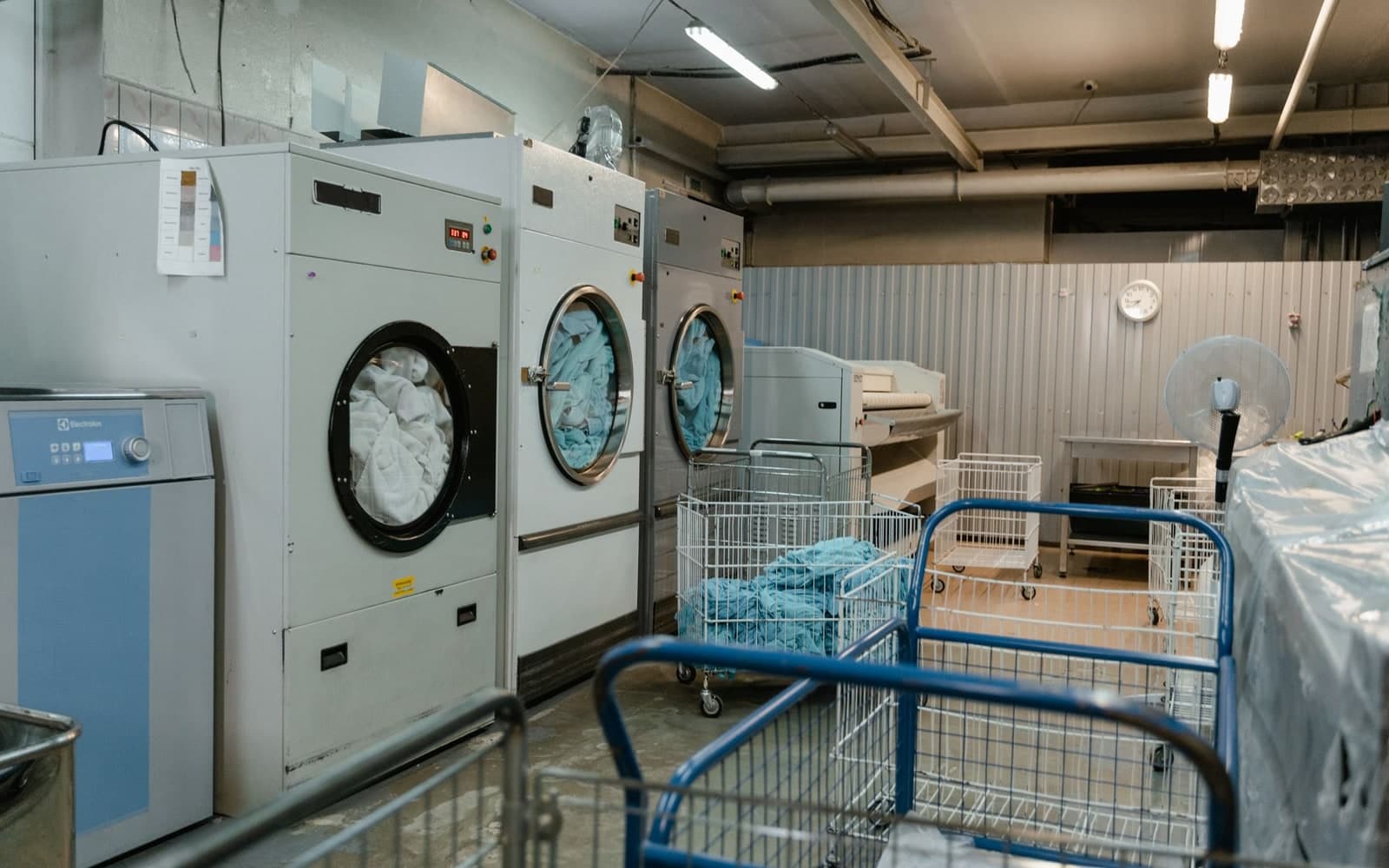
A laundry trolley might seem like a simple piece of equipment, but in a commercial operation processing hundreds of kilograms of linen daily, proper trolleys are essential for worker safety, workflow efficiency, and infection control.
Manual handling of heavy laundry loads leads to back injuries, fatigue, and reduced productivity. A quality laundry trolley allows one worker to move 50-100kg of linen safely, protects clean garments from floor contamination, and creates clear workflow separation between soiled and clean zones, a critical requirement for healthcare laundries complying with SANS 10146.
Rectangular linen trolleys, The workhorse of hotel and hospital laundries. These trolleys feature a rectangular steel or plastic frame with a removable fabric or vinyl bag (typically 200-300 litre capacity). They’re designed to fit through standard doorways and elevators, and the removable bag lifts straight into a washing machine.
Round sorting trolleys, Used in commercial laundries for sorting garments by color, fabric type, or customer. Multiple compartments allow efficient pre-sort before washing. Typically smaller (100-150 litres per compartment) but mobile.
Hanging trolleys, Rail-mounted trolleys for transporting pressed garments on hangers directly from finishing stations to customer pickup areas. Essential for dry cleaners to prevent re-wrinkling.
Platform trolleys, Flat platforms with wheels for moving heavy equipment, bulk chemical containers, or stacked linen loads. Not technically “laundry trolleys” but invaluable in larger operations.
Load capacity: Check the manufacturer’s weight rating. Budget trolleys rated for 50kg will fail quickly in commercial use where 80-100kg loads are common. Industrial-grade trolleys are rated for 150kg+.
Wheel type and quality: This is where cheap trolleys fail first. Look for:
-
Heavy-duty swivel casters (at least 100mm diameter, preferably 125mm) for manoeuvrability under load
-
Rubber or polyurethane wheels for quiet operation (critical in hotels)
-
Two swivel wheels + two fixed wheels for stability when pushing heavy loads
-
Brakes on at least two wheels for safety on inclines
Frame material: Stainless steel is ideal for wet environments and healthcare facilities (withstands sanitising, rust-proof). Powder-coated steel is acceptable for dry areas. Avoid chrome-plated frames in humid laundries, the chrome will pit and rust.
Bag material and attachment: Vinyl and canvas bags are most common. Ensure the bag attaches securely with hooks or grommets, bags that slip off mid-transport cause chaos. Removable bags should be washable for hygiene compliance.
Maneuverability in tight spaces: Measure your facility’s doorways, aisles, and elevator dimensions before purchasing. A trolley that doesn’t fit through a doorway is useless.
Load shedding considerations: During power outages, your washing machines stop but laundry still needs to move. Having sufficient trolleys means you can continue sorting and staging work even when machinery is down, resuming production immediately when power returns.
Iron Shoes and Ironing Board Covers: Protecting Your Finishing Equipment
An iron shoe (also called an iron shoe cover, iron soleplate cover, or Teflon iron shoe) is a protective cover that fits over the soleplate of a commercial steam iron. Made from Teflon (PTFE) or similar non-stick material, iron shoes serve three critical functions:
-
Prevent fabric scorching, The Teflon layer distributes heat evenly and prevents direct metal-to-fabric contact, protecting delicate fabrics from heat damage.
-
Eliminate shine on dark fabrics, Pressing dark garments (suits, trousers, formal wear) directly with a bare iron soleplate can create unwanted shine from heat and pressure. An iron shoe prevents this.
-
Protect the iron soleplate, Iron shoes prevent scratching and chemical buildup on expensive commercial iron soleplates, extending their lifespan.
Dry cleaners, hotels, and garment manufacturers use iron shoes constantly on delicate silks, wools, and synthetic fabrics where temperature precision is critical.
Size and fit: Iron shoes are not universal. They’re sized to specific iron models or general size categories (small, medium, large). Measure your iron’s soleplate dimensions or check the manufacturer’s specifications before ordering. A poorly fitting shoe that slips during use is dangerous and ineffective.
Material quality: Premium iron shoes use genuine Teflon (PTFE) which withstands temperatures up to 260°C. Cheaper alternatives use unknown coatings that deteriorate quickly or emit fumes at high temperatures. Given that iron shoes cost R80-R250 each and last 6-12 months with proper care, this isn’t the place to cut corners.
Thickness: Thicker iron shoes (1.5-2mm) provide better heat distribution and last longer than thin (0.5mm) alternatives. However, they also reduce heat transfer slightly, requiring minor temperature adjustments.
Replacement schedule: Iron shoes are consumables. They degrade from heat exposure, chemical residue, and mechanical wear. Inspect them weekly for cracks, discoloration, or rough spots. Replace immediately when damaged, a torn iron shoe can transfer adhesive residue to garments, ruining them.
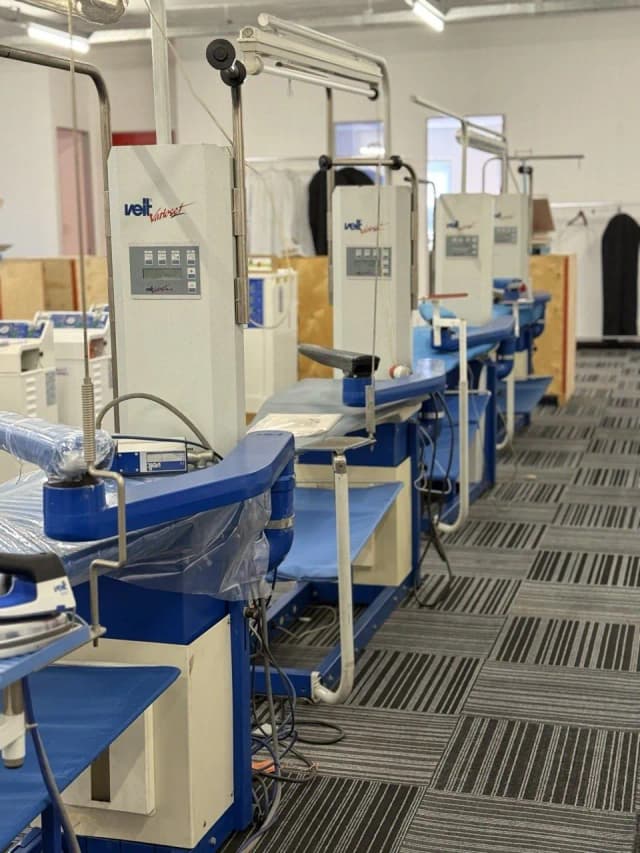
Commercial ironing board covers differ dramatically from domestic versions. Professional covers must withstand 8-12 hours of daily use, high-temperature steam, and repeated washing.
Industrial ironing board covers feature:
-
Heat-reflective aluminium or metalized surface, Reflects heat back through the garment, reducing ironing time
-
Thick felt or foam padding, Provides cushioning and moisture absorption
-
Drawstring or elastic fastening, Keeps cover taut during use (loose covers create wrinkles)
-
Scorch-resistant materials, Withstand temperatures up to 200°C
Vacuum table covers for commercial vacuum ironing tables have additional requirements:
-
Perforated material allowing air suction
-
Durable stitching that won’t unravel under vacuum tension
-
Heat and moisture resistance
-
Exact fit for the table dimensions
Standard covers need replacement every 6-12 months in commercial operations. Tears, burns, and embedded stains accumulate despite regular washing, eventually transferring marks to clean garments.
Liquid Detergents for Commercial Laundry
Detergent is the most consumed item in any commercial laundry, and its quality directly impacts wash results, fabric lifespan, equipment maintenance costs, and environmental compliance.
South African commercial laundries face unique challenges: hard water in many regions (Gauteng, Free State), high electricity costs encouraging cold-water washing, water scarcity driving recycling systems, and municipal discharge regulations limiting chemical content in wastewater.
Liquid detergents have largely replaced powder in modern commercial operations for several reasons:
-
No residue buildup, Powders leave undissolved particles in machines and drain lines, causing maintenance issues
-
Better low-temperature performance, Liquids dissolve completely in cold water, critical for energy efficiency
-
Precise dosing, Automated dosing systems handle liquids more accurately than powders
-
Reduced dust, Important for worker health and safety compliance
Alkaline-based detergents, The workhorses for heavily soiled industrial laundry (mining coveralls, restaurant linens, hospital scrubs). High pH (10-12) breaks down protein-based stains, grease, and oils effectively. Must be followed by a neutralizing rinse to prevent fabric damage and skin irritation.
Neutral pH detergents, Formulated for delicate fabrics, colored textiles, and operations with on-premises wastewater treatment. Lower pH (7-8) reduces environmental impact and fabric wear.
Oxygen-based detergents, Use hydrogen peroxide or sodium percarbonate for whitening and stain removal without chlorine bleach. Increasingly popular as water discharge regulations tighten.
Specialty detergents, Formulated for specific challenges:
-
Dry cleaning detergents for hydrocarbon and perc machines
-
Healthcare laundry detergents with antimicrobial properties
-
Food service detergents for grease-heavy loads
-
Water-softening detergents for hard water regions
Modern commercial laundries use automated dosing systems that inject precise amounts of detergent, bleach, and additives at specific points in the wash cycle. These systems:
-
Eliminate operator error and waste
-
Reduce chemical costs by 15-25% through precision dosing
-
Improve wash consistency and quality
-
Track chemical usage for cost accounting and environmental compliance reporting
-
Are increasingly required for government contracts (B-BBEE procurement often mandates environmental management systems)
Dosing systems are typically supplied and maintained by the chemical supplier as part of a long-term service agreement. Universe Corp works with quality chemical partners to provide integrated detergent supply and dosing.
Why Choose Universe Corp for Your Commercial Laundry Supplies
Universe Corp has been supplying South Africa’s commercial laundry industry since 1985, providing not only heavy equipment but the complete range of supplies and accessories that keep operations running smoothly.
Local stock availability. We maintain inventory of high-demand consumables in South Africa, with typical delivery times of 3-5 business days to major metros. No waiting months for container shipments.
Quality-tested products, Every item we stock is tested for commercial use. We don’t sell cheap imports that fail in weeks. Our suit covers, iron shoes, and trolleys are proven in South African dry cleaners, hotels, and laundries operating daily.
Consolidated purchasing, Order your heavy equipment, spare parts, consumables, and chemicals from one trusted supplier. Simplified procurement, one invoice, one delivery, one point of contact.
Expert guidance, Our team helps you calculate consumption rates, right-size your orders, and select the correct specifications for your operation. First-time buyers receive setup consultations to avoid costly mistakes.
Competitive wholesale pricing. We offer volume discounts on consumables without requiring impractical MOQs. A 10-room guesthouse and a 300-room hotel both receive fair pricing appropriate to their scale.
After-sales support, If a product doesn’t perform as expected or you need guidance on proper use, we’re a phone call away, not on another continent.
If you’re planning to start your own laundry business, our How to Start a Laundry Business in South Africa covers startup costs, equipment selection, ROI planning, business model options, and everything else you need to launch successfully in South Africa.