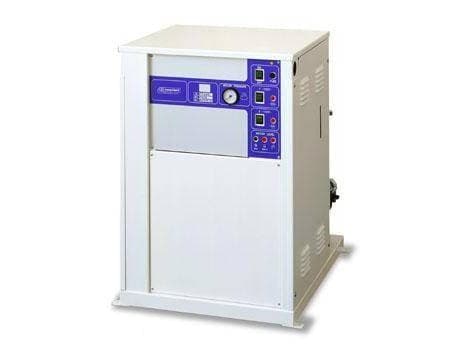
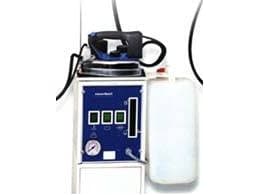
Model
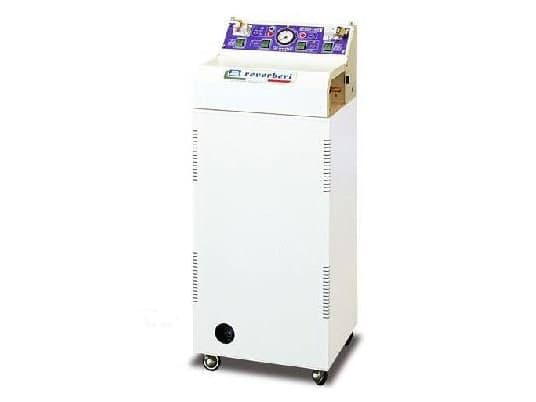
M201/7
Boiler type
GL5 INOX (stainless steel)
 BÖWEDry cleaning machinesGermany
 VEITPressing and finishingGermany
 ReverberiIroning and finishingItaly
 Speed QueenCommercial and industrial laundryUSA
 RotondiPressing and garment careItaly
 SilterSteam ironing and boilersTurkey
 BÜFATextile care chemicalsGermany
 ThermopatchLabelling and markingNetherlands
 Due EffeProfessional steam ironsItaly
 Silver StarSteamers and pressingSouth Korea
 Cleaner's SupplyTags, forms and consumablesUSA
Universe Corp supplies a complete range of professional garment finishing equipment from leading European manufacturers, backed by local installation, operator training and spare parts support.
Tell us what you press in a day and where the queue forms. Finishing is usually the constraint, and it is usually fixable with one machine rather than four.
Garment finishing is the post-wash, post-clean stage that turns a cleaned item into a press-ready, customer-ready one. It covers every machine that shapes, presses, steams, dries or packages a textile item after washing or cleaning, and it is the widest category Universe Corp carries.
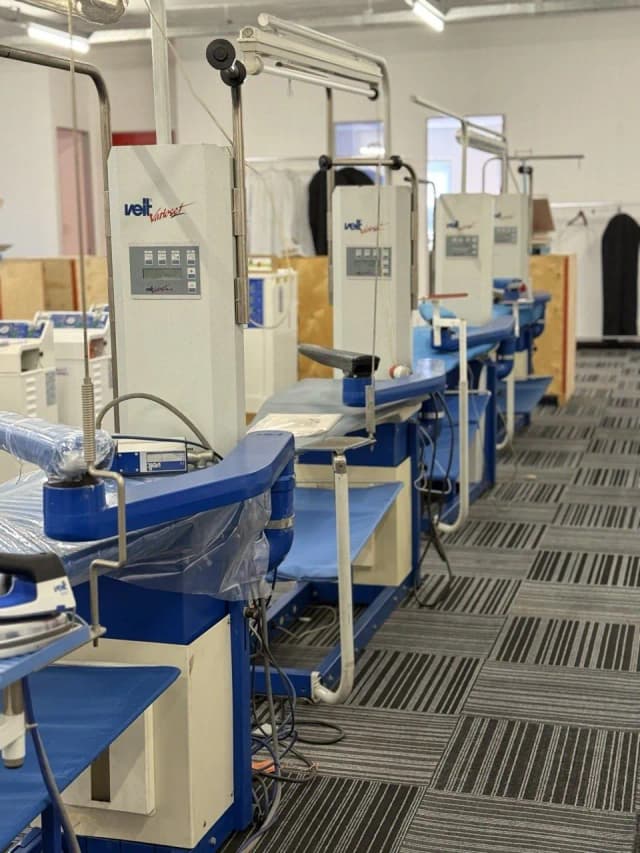
In most dry cleaning shops the cleaning machine has spare capacity and the pressing line does not. That makes finishing the place where a capital investment shows up fastest in throughput. A form finisher that turns a garment in 30 seconds replaces several minutes of hand pressing, and it does it to a consistent standard that does not vary with who is on shift.
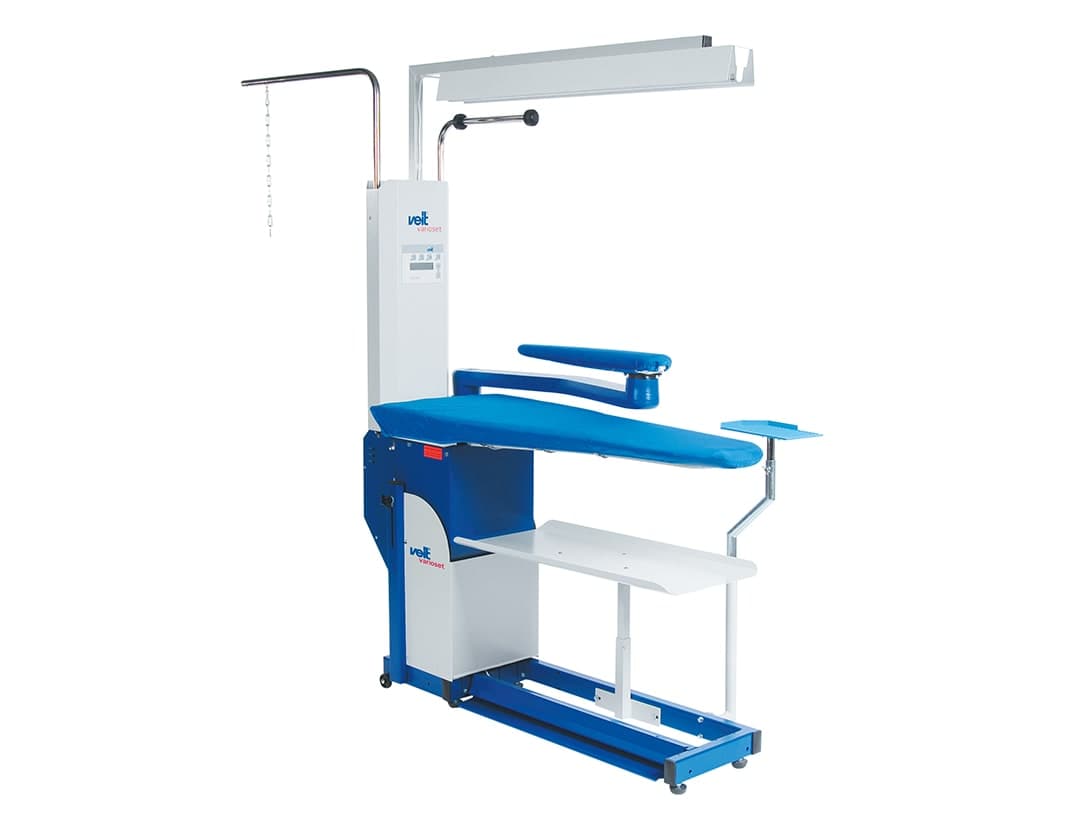
We represent VEIT of Germany, and Reverberi, Due Effe and Rotondi of Italy. Between them they cover the whole line, from a single vacuum ironing table in a tailoring studio to a full tunnel-fed finishing room in a commercial laundry.
Almost everything here runs on steam, and adding a station to a boiler that is already at capacity produces two stations that both underperform. If you are extending a line, have the steam demand calculated first, see industrial steam boilers.
Stain treatment happens at a spotting table before or after the main clean, and the machine for it sits in this category. The Reverberi M4201 TASMAC has a vacuumed board and arm, a steam connection and two spotting guns, one for water-based agents and one for solvent-based. The agents themselves are under detergents and chemicals.
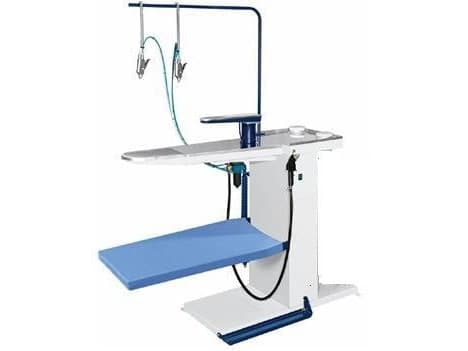
Three families here have pages of their own where the models from several makers sit side by side: shirt finishers, vacuum ironing tables and steam presses and extraction, which is where the roof-mounted Moro extraction towers that take fumes and steam out of the building are listed. Rotondi's machines are catalogued as ranges and are listed under the same headings.
Some makers are listed by machine family rather than model. Each range page covers the family and what to specify.
Tell us what you press in a day and where the queue forms. Finishing is usually the constraint, and it is usually fixable with one machine rather than four.