








Garment steamer prices in South Africa span a huge range: entry handhelds sell for a few hundred rand at retail chains, mid-range consumer uprights run into the low thousands, and professional commercial steamers cost more again. The price differences are not marketing. They reflect steam output, duty cycle, certification and whether spare parts exist in the country. This guide explains each price band, what you actually get in it, and how to calculate the real cost of a steamer over its working life.
Universe Corp has supplied professional garment care equipment to South African businesses since 1985, so the numbers below reflect what we see across the market, not our own shelf alone. Note that landed prices on imported equipment move with the exchange rate, so treat bands as a guide and request a current quote for exact pricing.
The Three Price Bands
Entry level: consumer handhelds
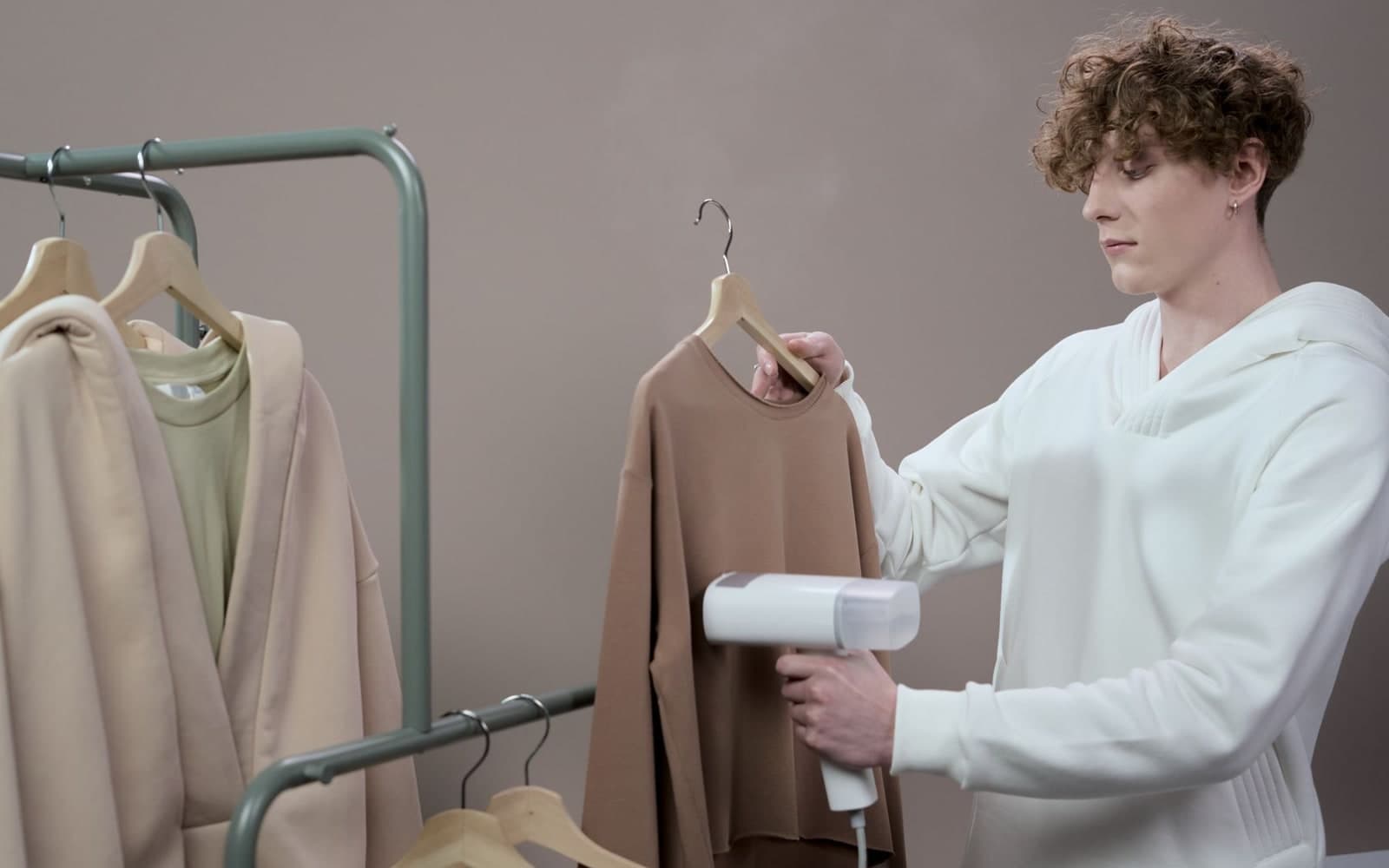
Sold at chain retailers, these compact units suit travel and occasional home touch-ups. Typical characteristics: small tanks (100 to 300ml), 700 to 1200W elements, a few minutes of steam per fill, and warranties that exclude business use. For one outfit a week they are fine. Under daily use they commonly fail within a year, and with no spare parts channel, a failure means a new machine.
Mid range: consumer uprights
Floor-standing units from consumer brands, with bigger tanks and hanging poles. Better for regular home use and very light boutique duty. The limits are duty cycle and support: they are still consumer appliances, still built for minutes rather than hours per day, and still largely disposable when a pump or element fails.
Professional: commercial upright steamers
This is the band where the Silver Star SR-5000 and SR-8000 sit. What the higher price buys is specific and measurable: 1350W continuous steam output, a duty cycle designed for all-day daily use, five international certifications (CE, VDE, UL, CSA, CQC), water-shortage alarm with auto-protection, and a spare parts supply held locally in Johannesburg. Professional steamers are repairable assets rather than disposable appliances.
What Actually Drives the Price of a Steamer
Cost Per Year Beats Sticker Price
The correct comparison for any business purchase is cost over working life, not price at the till. A worked example makes it obvious:
-
Consumer route: a mid-priced handheld replaced every 10 to 12 months under daily boutique use, plus staff time lost to small tanks and reheats. Over five years you buy five machines and still steam slowly.
-
Professional route: one certified commercial upright, descaled routinely, with an occasional wear part replaced from local stock. Over five years you buy one machine, steam faster every single day, and still own a working asset at the end.
On that arithmetic, the professional machine is routinely the cheaper steamer, which is exactly why dry cleaners and department stores standardised on this class of equipment long ago. Our garment steamer buying guide walks through matching the machine to your daily volume, and our SR-5000 vs SR-8000 comparison covers choosing between the two professional models.
Budgeting Tips for South African Buyers
-
Ask for the landed, all-in price. Confirm what delivery, setup guidance and support are included. Universe Corp delivers Silver Star steamers from local Johannesburg stock, so there is no import lead time or surprise freight cost.
-
Factor in water treatment in hard-water areas. A basic filtration or descaling routine protects the element and is far cheaper than repairs. See our water filtration options.
-
Check warranty terms for business use. Most consumer warranties exclude commercial use entirely. Professional equipment supplied through a distributor is supported for exactly that use.
-
Buy the duty cycle, not the brochure. If the machine will steam for hours a day, nothing below commercial grade is genuinely cheap.