









Choosing a steamer for clothes comes down to one honest question: is this for occasional touch-ups, or for real daily work? A handheld steamer suits travel and the odd creased shirt. An upright steamer suits anyone steaming garments every day, whether that is a boutique preparing floor stock, a guesthouse handling guest laundry, or a dry cleaner finishing delicates.
Both types produce steam that relaxes fabric fibres and releases wrinkles without an iron’s hot soleplate. The difference is how much steam, for how long, and how comfortably. Having supplied garment care equipment to South African businesses since 1985, here is how we advise customers to choose.
How Each Type Works
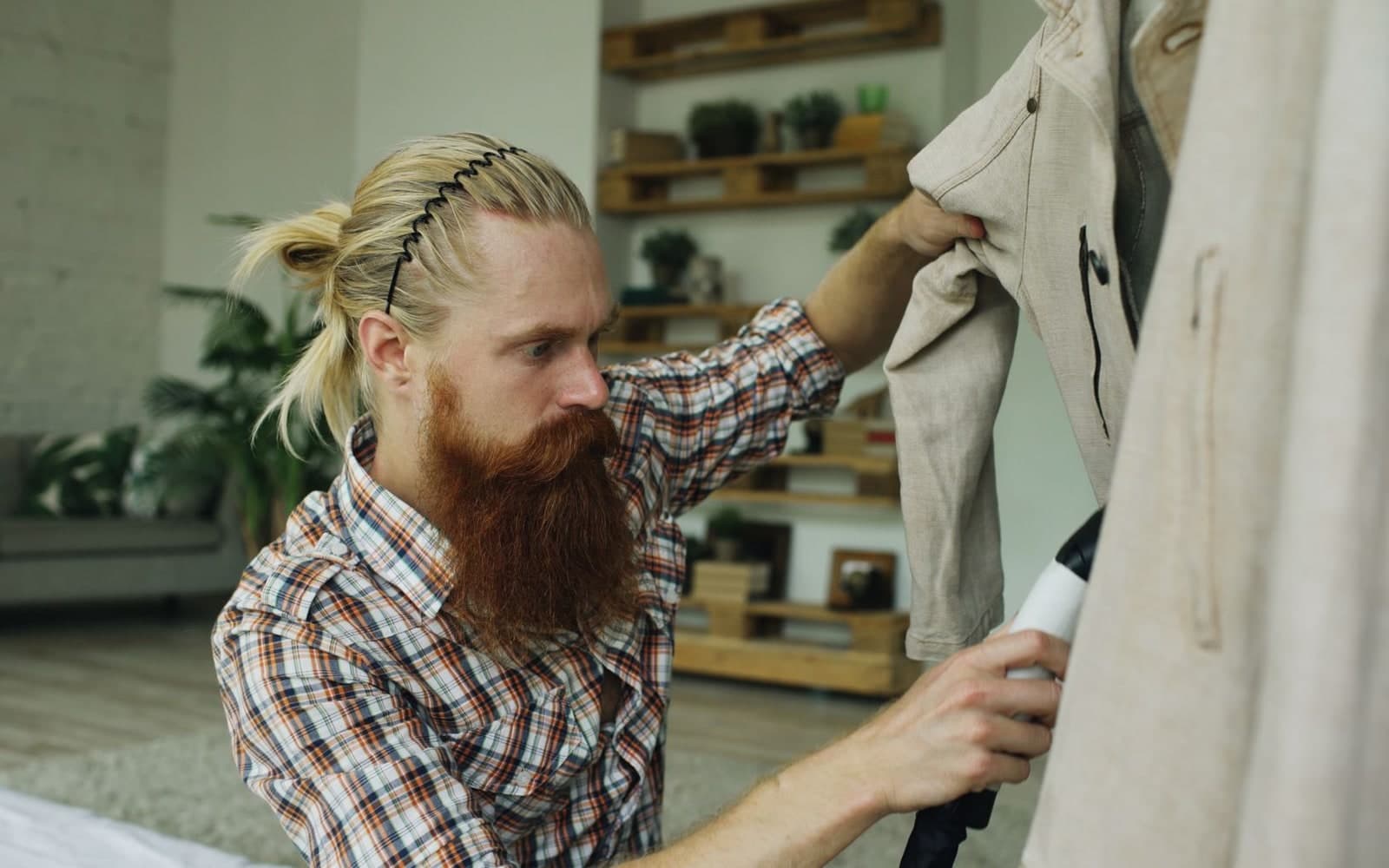
A handheld steamer is a self-contained unit: small water tank, heating element and steam head in one hand-held body. It heats fast, packs small, and runs out of water and steam quickly.
An upright steamer (also called a standing or professional garment steamer) keeps a large water tank and powerful heating element in a floor-standing base, feeding steam through a hose to a steam head, with garments hung on a built-in pole or rail. The Silver Star SR-5000 and SR-8000 are this type: 1350W of steam output, water-shortage protection and a duty cycle built for daily commercial use.
Head-to-Head Comparison
When a Handheld Steamer Is the Right Choice
-
Travel and occasional home touch-ups
-
A few light garments per week, mostly shirts and blouses
-
No fixed workspace and minimal storage
Be realistic about limits. Small tanks empty in minutes, steam pressure drops as the tank empties, and holding a hot unit at shoulder height through a rack of garments is tiring. Under daily business use, most consumer handhelds fail within a year, and business use typically voids their warranties.
When an Upright Steamer Is the Right Choice
-
Any business application. Retail floors, sample rooms, hotels, dry cleaners and manufacturers all steam in volume. Throughput and reliability decide profitability, and that is what uprights are built for.
-
Heavy and delicate fabrics alike. Strong continuous steam relaxes suiting and curtains, while the no-contact head stays safe on silk, sequins and prints.
-
Rack work. Garments hang on the built-in pole at working height. Steam a garment in seconds, slide on the next.
Our garment steamer buying guide for South Africa covers how to size an upright to your daily volume, and the differences between the SR-5000 and SR-8000 models.
The Cost Question, Answered Honestly
A handheld costs a few hundred rand; a professional upright costs more upfront. For a home user steaming one outfit a week, the handheld wins. For a business, the arithmetic reverses fast: one replaced handheld per year, plus staff minutes lost waiting for reheats and refills, exceeds the price gap quickly. Professional units also hold value because spare parts exist. Universe Corp stocks Silver Star spares in Johannesburg, so a worn part is a repair, not a replacement machine.