










An industrial steam iron is not a bigger household iron. It is a different machine: built for continuous daily pressing, fed with steam from an external source or a gravity tank, fitted with replaceable wear parts, and designed to hold precise temperature through hours of work. If you run a dry cleaner, commercial laundry, garment factory or busy alterations workshop, the right industrial iron determines your pressing quality and your throughput.
This guide covers the three types of professional iron, the specifications that matter, and how to choose for a South African operation. Universe Corp has supplied industrial pressing equipment since 1985 and carries professional iron ranges from Silver Star, Due Effe (Italy) and Silter (Turkey), with spares held in Johannesburg.
The Three Types of Professional Steam Iron
1. Gravity-feed steam irons
A water bottle hangs above the workstation and feeds the iron by gravity. The iron’s own element turns the water to steam at the soleplate. Gravity-feed irons such as the Silver Star gravity iron are the workhorse of dry cleaners and alterations rooms: simple, reliable, quick to set up, and independent of a boiler. Their steam is generated on demand, which suits intermittent pressing.
2. Boiler-fed (steam generator) irons
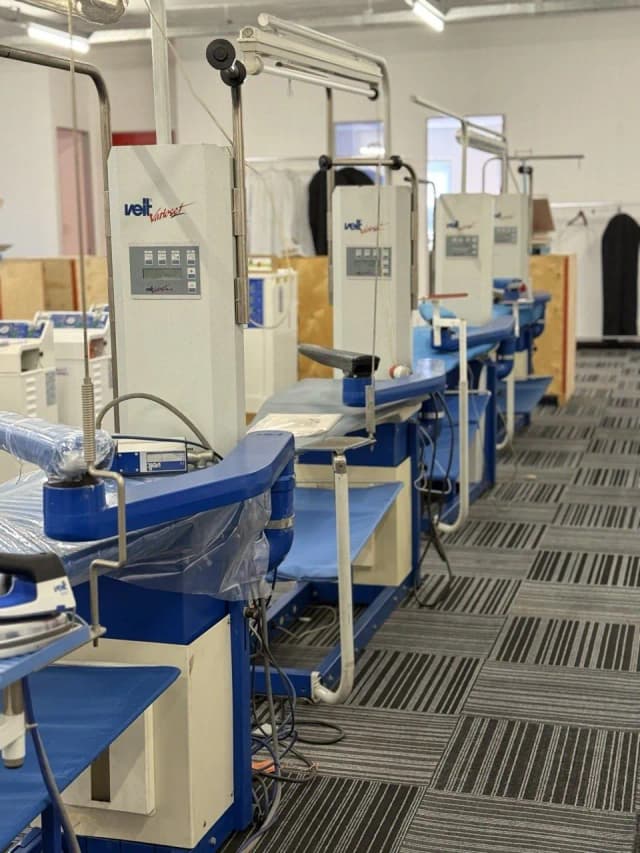
The iron receives steam from a separate boiler or steam generator, either a dedicated small unit at the station (see steam generator irons) or a central boiler serving several stations. Steam is drier, more consistent and effectively unlimited, which is why production lines and heavy-throughput pressing rooms use this setup. If you are outfitting multiple stations, a central steam boiler or generator becomes the heart of the room.
3. Electric dry and steam irons
Heavier professional electric irons, including specialist dry irons for fusing, laundering and finishing tasks. Italian maker Due Effe builds a full range of professional and industrial irons across these categories, from all-steam models to specialist designs for opening seams and pressing during garment construction.
Specifications That Separate Good From Disposable
-
Soleplate quality and shape. Professional soleplates hold even temperature and glide under weight. Pointed profiles reach seams and detail work; wider plates cover flatwork faster.
-
Weight. Counter-intuitively, a heavier iron is better: the weight does the pressing, saving operator effort over a shift. Industrial irons are noticeably heavier than household units by design.
-
Temperature control. A precise, stable thermostat protects fabric and keeps results consistent. On boiler-fed systems, steam pressure and dryness add a second layer of control.
-
Replaceable parts. Elements, thermostats, cork handles, cables and shoes should all be replaceable. This is what makes an industrial iron a decade-long asset. Confirm the parts channel before buying any brand; Universe Corp holds spares and consumables for the ranges we sell.
-
Teflon shoes. A clip-on shoe protects delicate and dark fabrics from shine. Cheap insurance against pressing damage.
-
Vacuum table pairing. An industrial iron performs at its best on a vacuum ironing table that holds the garment and extracts steam. Budget for the station, not the iron alone. See our vacuum units range.
Buying Advice for South African Conditions
-
Water quality matters. Much of South Africa has hard municipal or borehole water, which scales elements and steam passages. Use treated water or fit filtration, and descale on schedule.
-
Power stability. Gravity-feed irons draw modest power and restart instantly after an outage, a real advantage under load shedding. Central boiler systems should be sized with backup power in mind.
-
Buy where the parts are. An imported iron without a local parts channel is disposable. Every industrial iron Universe Corp sells is backed by spares in Johannesburg and technical support countrywide.
For the broader picture of professional pressing, our guide to steam irons vs garment steamers vs presses explains which finishing tool suits which workflow, and the full range is on our electric and steam irons page.