






Three pieces of equipment look superficially similar, a steam iron, an upright garment steamer, and a steam press, and operators often buy the wrong one because the marketing language overlaps. But these are three genuinely different tools designed for three different workflows. A dry cleaner finishing 200 garments a day needs a different setup than a tailoring shop pressing seam allowances or a garment manufacturer running an in-line finishing station.
This guide cuts through the marketing and explains what each piece of equipment is genuinely best at, the workflow each fits, and how to combine them when you need more than one. Every recommendation references the brands Universe Corp distributes for commercial customers in South Africa.
The Three Tools, in One Sentence Each
-
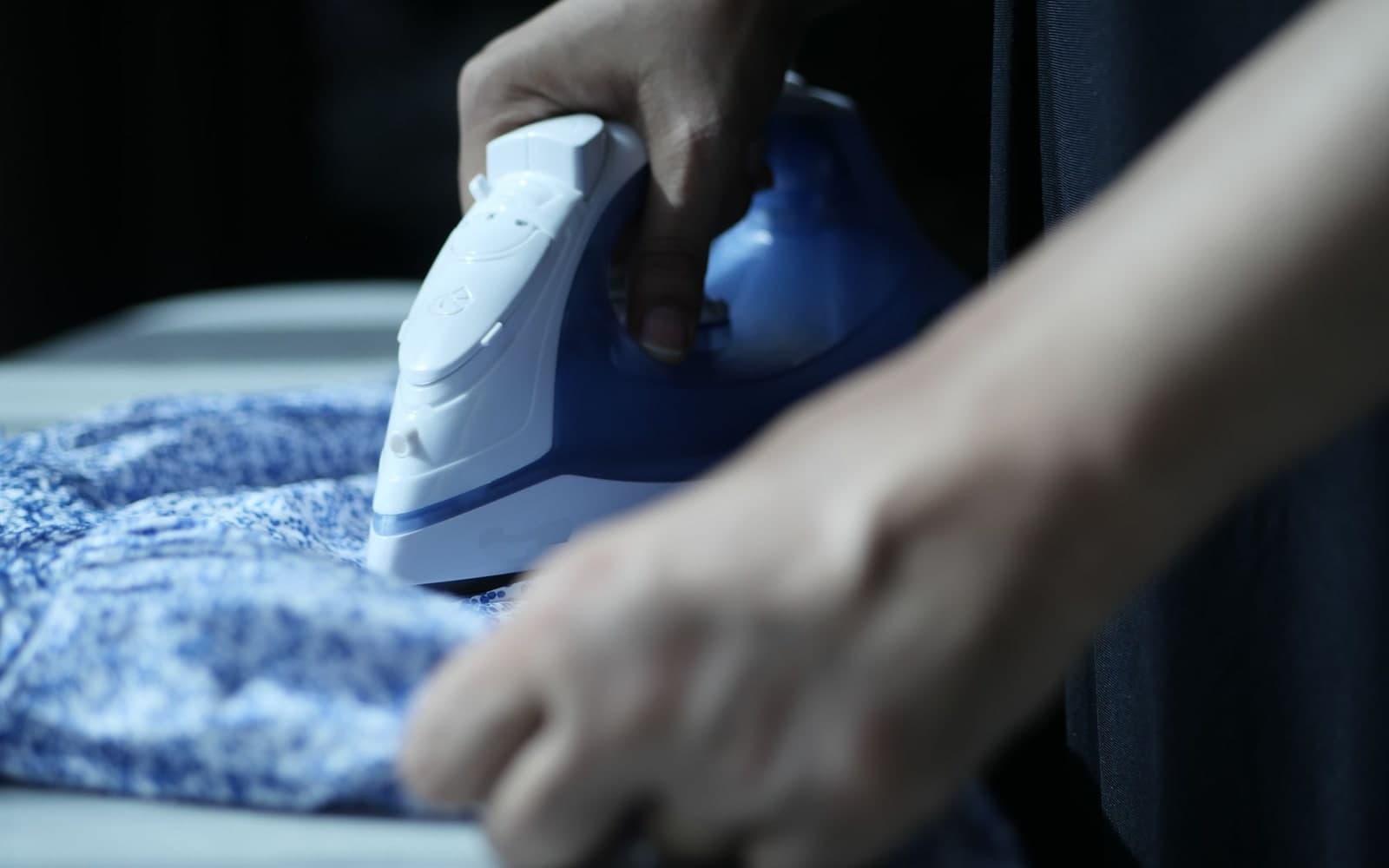
Steam iron, applies heat, pressure, and steam to a garment laid on a board. Makes sharp creases and removes set-in wrinkles by combining direct contact with steam penetration.
-
Garment steamer, passes steam through a hand-held head held against a hanging garment. Relaxes wrinkles by humidifying fabric, no contact pressure.
-
Steam press, closes a heated platen onto a garment, applying full-area heat, steam, and pressure simultaneously. Finishes a whole panel in one cycle.
The differences are physical: a steamer never touches the garment with anything but steam, an iron contacts a small area at a time, and a press contacts a large area in a single closing motion. That physical difference dictates which workflows each is good at.
Side-by-Side Comparison
| Criterion | Steam Iron | Garment Steamer | Steam Press |
|---|---|---|---|
| Direct fabric contact? | Yes, soleplate | No | Yes, full platen |
| Sharp crease capability | Excellent | No | Excellent |
| Set-in wrinkle removal | Excellent | Good (with practice) | Excellent |
| Risk of fabric scorch | Moderate | Very low | Moderate (mitigated by buck cover) |
| Risk of fabric shine | Yes (on dark wools) | No | Yes, use press cloth |
| Speed per garment (typical) | 3-6 minutes | 2-4 minutes | 30-90 seconds |
| Operator skill required | High | Low-Moderate | Moderate-High |
| Equipment footprint | Small (board + iron) | Small (upright unit) | Large (free-standing) |
| Equipment cost (commercial, ZAR) | R8,000-R25,000 (boiler-fed) | R12,000-R45,000 | R45,000-R250,000+ |
When to Use a Steam Iron
The steam iron is the most versatile tool of the three. A skilled operator with a commercial steam iron and a vacuum table can finish almost anything, but it takes the most operator labour and the most skill.
Best at:
-
Sharp creases. Trouser leg creases, shirt sleeve pleats, dress shirt collars, the soleplate makes a crisper line than any steamer can.
-
Detail work. Around buttons, plackets, collar points, narrow seam allowances. The smaller iron tip gets into corners a press platen can’t reach.
-
Variable garment types. Tailoring and alterations shops handle a different garment every 10 minutes, the iron is the most adaptable single tool.
-
Touching up after a press or steamer. Many commercial workflows finish a garment with a press, then touch up details with an iron before it goes to the customer.
Brand recommendation
For commercial steam ironing, look at Silter (Italian boiler-fed steam ironing systems, pair a stainless boiler with a professional iron and steam-gun) and Due Effe (Italian industrial irons + heated and vacuum-extraction tables). Both are sold by Universe Corp with local spare parts. Avoid domestic steam irons for commercial use, the soleplate, thermostat and steam dosing aren’t engineered for shift-long duty.
When to Use a Garment Steamer
A garment steamer is the right tool when speed and gentleness matter more than absolute precision. It’s also the right tool for fabrics that can’t tolerate direct contact heat.
Best at:
-
Hung garments at speed. Hotel housekeeping, retail garment refresh, dry cleaner finishing, the garment never leaves the hanger.
-
Delicate fabrics. Silk, fine knitwear, lace, embroidered or beaded garments. Steam relaxes the fibres without the contact heat that can damage delicate weaves.
-
Lined garments. Where the iron’s pressure could mark the lining through the outer shell, a steamer relaxes both layers without imprinting.
-
Volume finishing. A steamer is faster than an iron when a “pass” is enough, most lined dress shirts, blouses, and casual garments don’t need iron-level precision.
Brand recommendation
Silver Star is Universe Corp’s recommended commercial steamer brand, the SR-5000 (1,350W) for under 100 garments/day and the SR-8000 (1,800W, 4.5L tank) for higher throughput. For deeper detail on commercial steamer selection, see our Commercial Garment Steamer Buying Guide for Dry Cleaners.
When to Use a Steam Press
A steam press finishes a whole panel of a garment in a single closing motion. It’s the right tool for repetitive volume work where the same shape needs the same finish hundreds of times a day.
Best at:
-
Volume shirt finishing. A shirt finisher (a press purpose-built for shirts) finishes a body, sleeves and collar in 60-90 seconds. A skilled iron operator does the same in 4-6 minutes.
-
Trouser legging. A leg press / trouser topper closes once on each leg and finishes the leg from waistband to hem.
-
Garment manufacturers’ in-line finishing. A press fits into a production line; an iron doesn’t.
-
Predictable shapes. Where every garment has the same outline (uniforms, hospital scrubs, identical hotel staff shirts), a press automates what an iron operator would otherwise repeat manually.
Brand recommendation
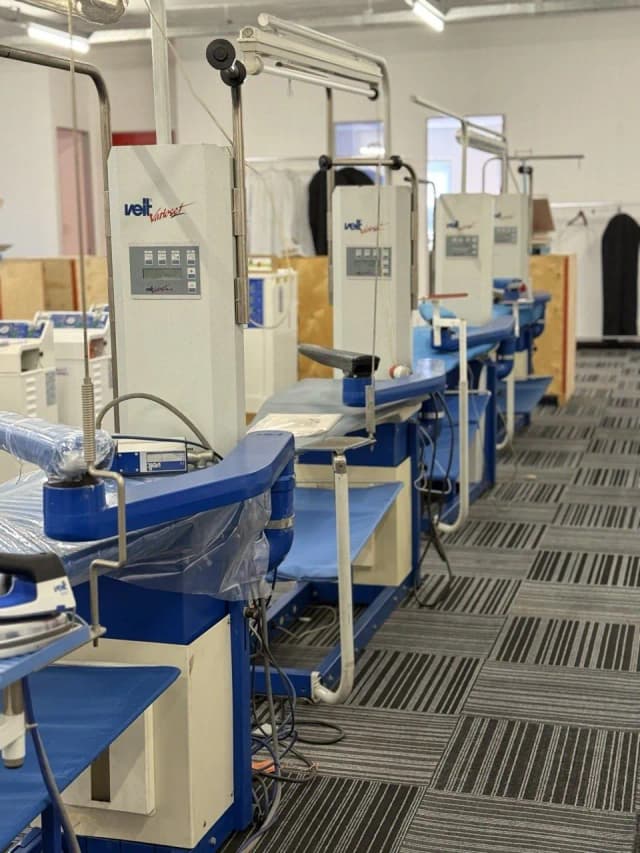
For commercial-scale presses and form finishers, VEIT is the industrial-quality benchmark, universal form finishers, shirt finishers, trouser toppers, vacuum tables, and steam tunnels. Rotondi is the Italian alternative, from vacuum tables and presses to complete shirt finishing lines. For mid-volume shops, Silter and Due Effe both offer compact presses sized for tailoring and alterations workflows.
Workflow-Based Recommendations
Rather than thinking “which tool is best”, think “which workflow am I running?” Here’s how the three tools map to four common South African operations.
Small dry cleaner (under 60 garments/day)
Recommended setup: Silver Star SR-5000 garment steamer (primary), plus a Due Effe commercial steam iron with a small vacuum table (for crease-work and detail). The steamer handles 70-80% of garments; the iron picks up the precision work.
Tailoring / alterations shop
Recommended setup: Silter or Due Effe boiler-fed steam iron with a heated vacuum table is the dominant tool. A small Silver Star steamer is useful for hung garment refresh between fittings, but the iron does the structural pressing work that tailoring requires.
Hotel laundry / mid-volume dry cleaner (100-300 garments/day)
Recommended setup: A VEIT shirt finisher or compact form finisher for the volume work, paired with a steam iron for detail and a steamer for hung garment touch-up. Three tools because the throughput demands automation but the variety still requires manual finishing on some pieces.
Garment manufacturer / industrial laundry (300+ garments/day)
Recommended setup: VEIT form finishers and steam tunnels integrated into the production conveyor. Steamers and irons become handover-area tools for inspection and touch-up, not the primary finishing equipment.
Cost Ladder: From Single Operator to Industrial
-
Single-operator dry cleaner setup: R20,000-R45,000 (steamer + commercial iron + vacuum table)
-
Mid-volume shop: R60,000-R150,000 (boiler-fed iron + larger steamer + small press)
-
Hotel laundry / commercial laundry: R200,000-R500,000+ (shirt finisher + form finisher + iron stations)
-
Industrial-scale garment manufacturer: R500,000-R2,000,000+ (full VEIT finishing line, steam tunnels, integrated conveyor)
The economics flip at scale: a single-operator shop pays high labour cost per garment because the operator is the bottleneck; an industrial line pays high equipment cost up front but very low cost per garment.