









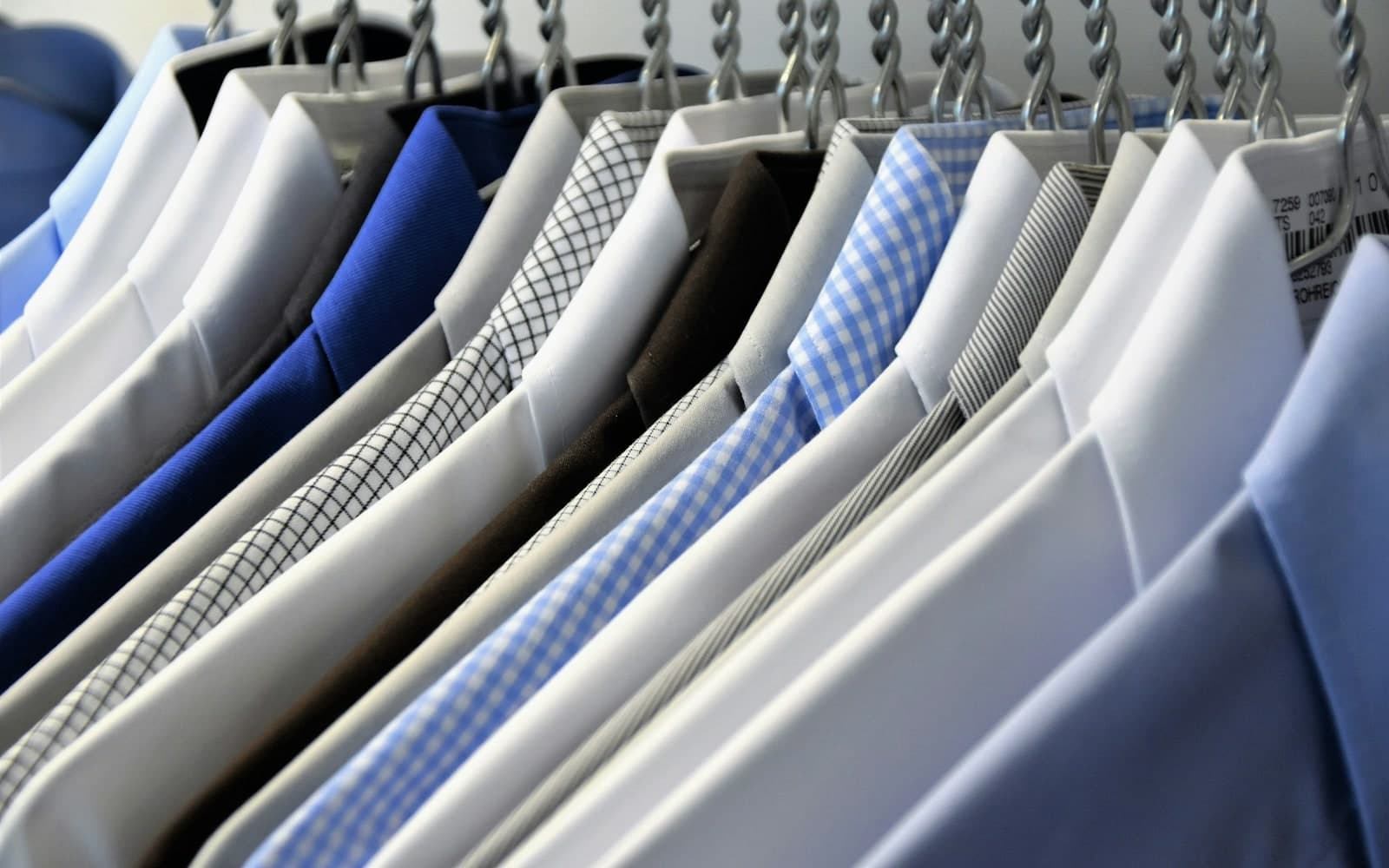
In almost every laundry and dry cleaner, shirts are the volume item: the daily river of business shirts that must come back crisp, identical and on time. They are also the most labour-hungry garment to press by hand, with a body, two sleeves, a yoke, collar and cuffs each demanding attention. The shirt finisher exists to break exactly this bottleneck, and for operations past a certain daily shirt count it is the single highest-return machine on the finishing floor.
Universe Corp has supplied finishing equipment to Southern African laundries and dry cleaners since 1985, including shirt finishing machines from Europe’s leading manufacturers. Here is how the machine works and how to know when your numbers justify one.
How a Shirt Finisher Works
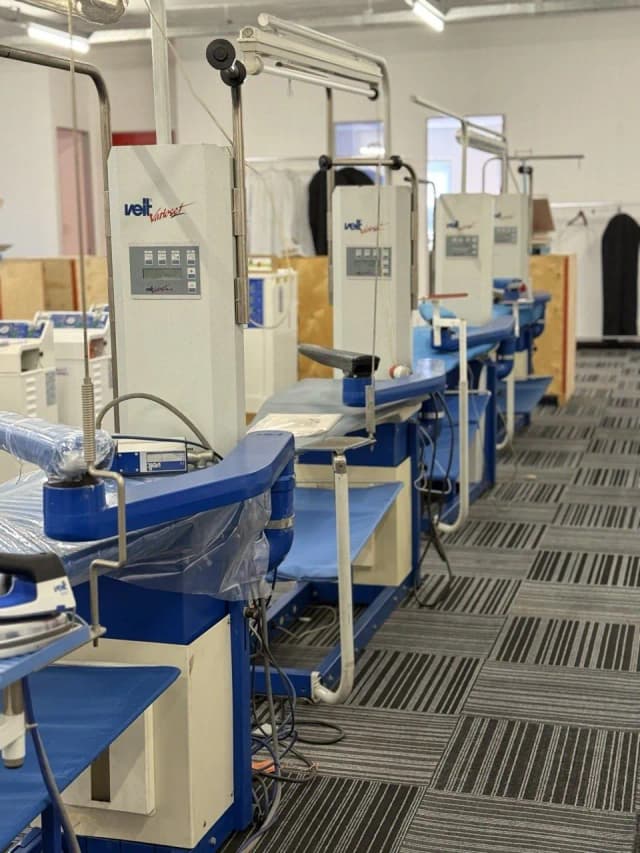
A shirt finisher presses a shirt from the inside out. The freshly washed, still-damp shirt goes onto a body form. The machine clamps or tensions the shirt, then drives steam and heated air through the fabric. Steam relaxes the fibres; tension holds the fabric smooth while hot air dries it in that smooth state. The shirt is effectively pressed and dried in one cycle, in shape, with no soleplate touching the fabric.
The operator’s remaining work is the touch-up: collar and cuffs, the two details customers inspect first, finished in seconds at an adjacent ironing station or dedicated collar-cuff press.
The result is a consistency hand pressing cannot match across hundreds of shirts: every shirt sees the same steam, the same tension, the same drying, regardless of which operator loaded it or what hour of the shift it is.
The Throughput Maths
The business case is arithmetic. Hand pressing a shirt properly takes minutes per shirt at an ironing station, and output per operator falls as fatigue sets in through a shift. A shirt finisher cycles in well under a minute plus loading and touch-up time, and the machine does not tire.
Run your own numbers on three inputs: daily shirt count, what pressing labour costs per hour, and what a redone shirt costs in time and customer goodwill. For most operations, somewhere in the range of dozens of shirts a day the machine begins paying for itself, and above that it becomes the obvious move. We are happy to work the calculation with you against actual model pricing.
When to Invest, and in What Order
The shirt finisher is typically the first automation a growing laundry adds, precisely because shirts are the volume item. The sensible sequence for most operations:
-
A proper ironing station first. A professional steam iron on a vacuum table remains the quality backstop and the touch-up station beside any finisher.
-
Shirt finisher when shirt volume justifies it. The bottleneck breaker. The equipment Universe Corp supplies is listed under shirt finishers, including Rotondi’s collar, cuff and body machines.
-
Form finisher and topper next if you finish suits at volume, as covered in our garment finishing equipment guide.
Two practical prerequisites: steam and air. Shirt finishers need adequate steam supply, so confirm your boiler has the capacity, and most models require compressed air. Universe Corp assesses both as part of any installation, and provides operator training so the machine hits its rated output from the first week.
What Separates Good Shirt Finishers
-
Tensioning quality. How well the machine tensions body and sleeves determines how much touch-up remains. Better machines mean fewer seconds of iron work per shirt.
-
Steam and air control. Adjustable steam, air temperature and cycle times let one machine handle poplin, oxford, blends and sizes from slim to oversized.
-
Build and duty cycle. This machine will cycle hundreds of times a day. European build quality, notably VEIT of Germany, is the industry reference for exactly this reason.
-
Parts and service. A finisher down for lack of a part stops your shirt line entirely. Buy where spares and technicians exist locally; Universe Corp holds parts in Johannesburg and services countrywide.