










A garment steamer in the hands of an experienced operator produces a noticeably better finish than the same steamer used without technique. Whether you’re refreshing retail floor stock, finishing dry-cleaned garments before customer collection, or maintaining uniform presentation across a hotel housekeeping team, the difference between adequate results and professional results comes down to a few consistent habits.
This guide covers professional steaming technique from setup through to maintenance, the practical knowledge that separates operators who get consistently good results from those who end up with watermarks, limp fabric, and re-creased garments.
Choosing equipment, not technique?
If you’re still selecting your steamer, see our Commercial Garment Steamer Buying Guide for Dry Cleaners or compare equipment classes in Steam Iron vs Garment Steamer vs Steam Press.
Getting Started: Setup, Water, and Heat-Up
Water Quality
Use clean, filtered water in your garment steamer. Most of South Africa’s major urban water supplies are moderately to highly hard, Johannesburg, Pretoria, and many inland cities have elevated mineral content that accelerates scale build-up inside the boiler. Scale reduces heating efficiency, shortens element life, and can eventually block steam passages. A basic inline water filter or pre-filtered water extends boiler service life significantly.
Do not use chemically softened water, the salt used in water softeners can corrode internal boiler components. Distilled or deionised water is acceptable but not always practical in commercial volumes. Filtered tap water is the right balance of practicality and boiler protection for most South African commercial operations.
Filling the Tank
Fill the water reservoir to the indicated maximum fill line, not above it. Overfilling can cause water to be pushed through the steam system before it’s fully vaporised, resulting in wet steam that leaves watermarks on fabric. If your steamer separates the boiler from the water reservoir (most professional models do), you can top up the reservoir during operation without interrupting steam output, do not attempt to open or add water directly to the boiler while it’s under pressure.
Heat-Up and Readiness
Switch the steamer on and allow it to complete its pre-heat cycle before attempting to steam any garment. The unit is ready when steam flows consistently and steadily from the steam head, not in intermittent bursts. If you press the trigger before the boiler is fully at temperature, you’ll get a mix of steam and hot water droplets that can watermark delicate fabrics. Give the unit 30–60 seconds of full steam flow before starting work. On a professional model like the Silver Star SR-5000, you can point the head away from garments and trigger a brief test burst to confirm the steam is dry and consistent before beginning.
Basic Steaming Technique
Hang the Garment Correctly
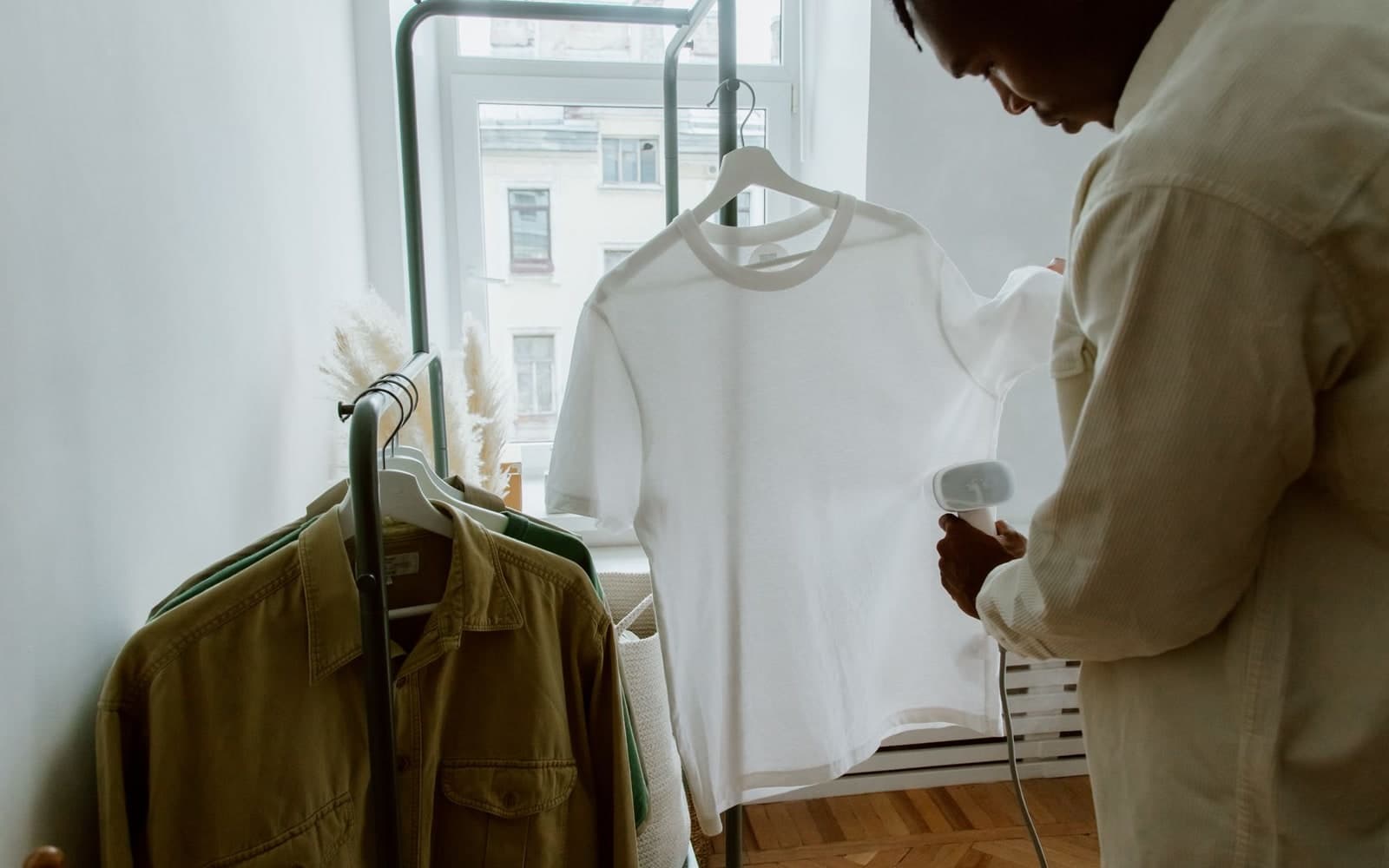
Always steam garments on a hanger, not laid flat. Hanging allows gravity to assist the steaming process, steam rises through the fabric and the natural downward pull of the garment helps fibres relax into a smooth position. Use a sturdy hanger appropriate to the garment type: a suit hanger for jackets and trousers, a contoured hanger for blouses and dresses. A flimsy wire hanger that allows the garment to twist will undermine your results.
Apply Gentle Tension
This is the most important technique that separates professional steaming from domestic use. With your free hand, apply gentle downward tension to the section of fabric you’re steaming, pull it taut but not stretched. The steam head needs something to work against. Fabric hanging loosely without tension will absorb steam but won’t smooth out properly because the fibres have no direction to align in. Tension gives them that direction, and the combination of heat, moisture, and tension is what produces a clean finish.
Top to Bottom, Consistent Distance
Always steam from the collar or shoulder downward. Moving top to bottom ensures that any condensation or drips from the steam head fall onto areas you haven’t steamed yet (or onto the floor) rather than onto sections you’ve already finished. Keep the steam head 1–2cm from the fabric surface, close enough for the steam to penetrate the fibres, far enough that you’re not applying direct pressure or depositing hot water directly onto the fabric. Move the head steadily rather than hovering in one spot, which can over-wet the fabric locally.
Allow Setting Time
Steaming temporarily relaxes the fabric fibres by introducing heat and moisture. Those fibres need 30–60 seconds to cool and reset in their new, smooth position before the garment is moved, folded, or bagged. Rushing this step, picking up the garment immediately after steaming and folding it into a bag, re-introduces creases before the fibres have set. Hang the garment for a moment after steaming, then bag or fold it.
Tips for Different Fabrics
Cotton and Linen
Cotton and linen respond well to steam but need more of it than lighter fabrics, their tighter weave structure requires more steam penetration to relax properly. Hold the head slightly closer to the fabric (1cm) and move more slowly than you would on a lighter fabric. For heavily wrinkled cotton (a crumpled dress shirt, for example), you may need to steam a section, apply tension and smooth with your hand, then pass the head over again. Cotton and linen can handle full steam output without damage.
Silk, Chiffon, and Delicate Fabrics
Delicate fabrics require more distance and a lighter touch. Hold the steam head 2–3cm from the surface rather than 1cm. Move faster, and use less tension, delicate fabrics can distort if pulled too hard while wet from steam. Never hold the head stationary on silk or chiffon. If the fabric shows any tendency to watermark, increase your working distance further or use a pressing cloth between the steam head and the fabric. Always test on an inconspicuous seam allowance when steaming an unfamiliar or high-value delicate garment.
Wool and Wool Blends
Wool responds beautifully to steam. It’s what dry cleaning finishing is built around. Use a moderate distance (1.5–2cm) and allow the steam to penetrate thoroughly. Wool holds creases well once set, so the technique of steaming with tension and allowing setting time is especially effective on wool suits and blazers. Be cautious with 100% wool at close range, oversteaming can cause the fibres to felt slightly over time. For structured wool garments (suit jackets, trouser pleats), move the steam head slowly and maintain consistent tension for the best result.
Synthetics and Polyester Blends
Synthetics are more heat-sensitive than natural fibres. Always start at a greater distance (3cm) and work closer only if needed. Many polyester and synthetic blended fabrics steam out well, but some, particularly thin polyester, can develop a slight sheen if the steam head is held too close for too long. Move briskly and maintain distance. If you’re unsure of the fabric composition, start conservatively and work progressively closer until you find the effective distance.
Lined Garments
Steam the outer fabric and the lining separately, working from the inside out for the lining. On a jacket, turn it inside out and steam the lining first, then flip right-side out and steam the outer fabric. This prevents the lining from pulling against the outer fabric during steaming (which can create distortion) and ensures both layers get proper treatment. Allow extra setting time for lined garments, the multiple layers retain heat longer.
Maintaining Your Garment Steamer
Descaling
In hard-water areas, which covers most of South Africa’s major cities, mineral scale builds up inside the boiler over weeks of use. Scale is calcium and magnesium carbonate deposited as water evaporates inside the boiler. Left unchecked, it reduces heating efficiency (the heating element has to work harder to heat through an insulating layer of scale), eventually blocks steam passages, and dramatically shortens element life.
Descale your steamer monthly in hard-water areas, or at the interval specified in the manufacturer’s manual. Most professional steamers can be descaled with a commercial citric acid descaler or a diluted white vinegar solution, check your specific model’s manual for the recommended agent. After descaling, always run the boiler through at least two full tanks of clean water before resuming normal use to flush all descaler residue from the system.
Daily and End-of-Day Care
At the end of each working day: switch the steamer off and allow it to cool completely before storing. If your steamer allows it, drain the remaining water from the boiler before storage, leaving water in the boiler overnight, particularly in areas with hard water, allows dissolved minerals to concentrate and deposit more rapidly than during normal steaming use. Wipe down the exterior, check the steam hose for any signs of wear or cracking, and inspect the steam head for blockages.
Steam Head Maintenance
The steam head vents can develop mineral deposits over time that reduce steam flow or create uneven output. If you notice the steam head producing a weak or inconsistent flow that doesn’t improve after descaling the boiler, the head vents may need cleaning. A needle or fine pin can clear individual blocked vents on most professional steam heads. If the head continues to underperform, contact Universe Corp for a replacement, steam heads are a standard consumable part stocked locally for the Silver Star range.
Common Mistakes to Avoid
-
Starting before the steamer is ready. Triggering the steam head before the boiler reaches full operating temperature produces wet steam, a mix of vapour and water droplets. That watermarks fabric. Always wait for consistent, dry steam before beginning work.
-
Steaming without tension. Applying steam to loosely hanging fabric without providing any tension produces minimal results. Technique matters as much as equipment, holding the fabric taut while steaming is what creates a professional finish.
-
Working bottom to top. Always steam top to bottom. Working upward means drips fall onto already-finished fabric, creating watermarks on sections you’ve completed.
-
Moving garments immediately after steaming. Freshly steamed fibres need 30–60 seconds to cool and set. Folding or bagging a garment immediately after steaming re-introduces creases before the fibres have reset.
-
Using hard tap water without filtration. In South African hard-water areas, using unfiltered tap water significantly accelerates scale build-up and shortens boiler life. A basic inline filter is a small investment relative to the cost of a replacement heating element.
-
Ignoring the water shortage alarm. The SR-5000 and SR-8000 both have automatic water shortage alarms. When the alarm sounds, refill the reservoir promptly, continuing to operate with insufficient water risks dry-running the heating element, which can cause permanent damage.
-
Holding the head stationary on delicate fabrics. A stationary steam head on silk, chiffon, or thin synthetics will over-wet and potentially damage the fabric. Keep moving, the steam has already penetrated the fabric by the time you’ve covered the section once.